
Industries
Dental Office Cleaning
Evening and weekend cleaning for dental offices: operatories, hygiene rooms and sterilization areas done to your infection-control steps, plus a reception area patients notice.
Printable checklist
Patients notice more than their teeth
Lying back in a dental chair, a patient has little to do except study the room. Fingerprints on cabinetry, a gray film along the baseboard and spotted chrome at the sink all register, even if nobody mentions them. A spotless operatory tells a nervous patient that the practice pays attention to detail, and that confidence starts in the waiting room.
Sage Commercial Cleaning works after your last patient leaves, or on the weekend, so the office is ready before the first hygiene appointment the next morning. Your office manager or infection-control lead shares the practice’s written steps, and those steps become the night checklist.
Operatories and hygiene rooms
Your clinical team handles chairside barriers and the dental unit itself between patients. Our nightly work picks up from there. In each operatory, crews clean the countertops and cabinet fronts staff have cleared, the sink and faucet, stools and the patient chair’s base and armrests where your steps include them, then switch plates, door levers and the floor. Light handles and other touch points follow your instruction sheet for both product and sequence.
When an operatory needs more than a nightly routine, such as after a remodel, before a new dentist joins, or on a quarterly schedule you choose, ask for a terminal clean; that operatory then receives its own visit with a complete disinfection from ceiling fixtures to floor.
Sterilization, x-ray and lab rooms
Instrument processing keeps the sterilization room humming from morning to close. After staff finish the last instrument cycle and clear the counters, crews wipe the open counter surfaces, sinks, cabinet fronts and the floor, leaving autoclaves, ultrasonic units and instrument trays undisturbed. Panoramic and x-ray rooms get a gentle pass over floors, door hardware and reachable surfaces, and an in-house lab room is swept and mopped so stone dust and polishing grit do not track into the hallway.
For clinical rooms Sage uses EPA-registered disinfectants, giving every product the full dwell time named on its label before anything is wiped away. Cleaners assigned to a practice complete bloodborne-pathogen safety instruction first. Their HIPAA-aware habits mean x-ray images, open treatment plans and logged-in workstations go unread and untouched, wherever they happen to be sitting.
Reception, waiting room and consult rooms
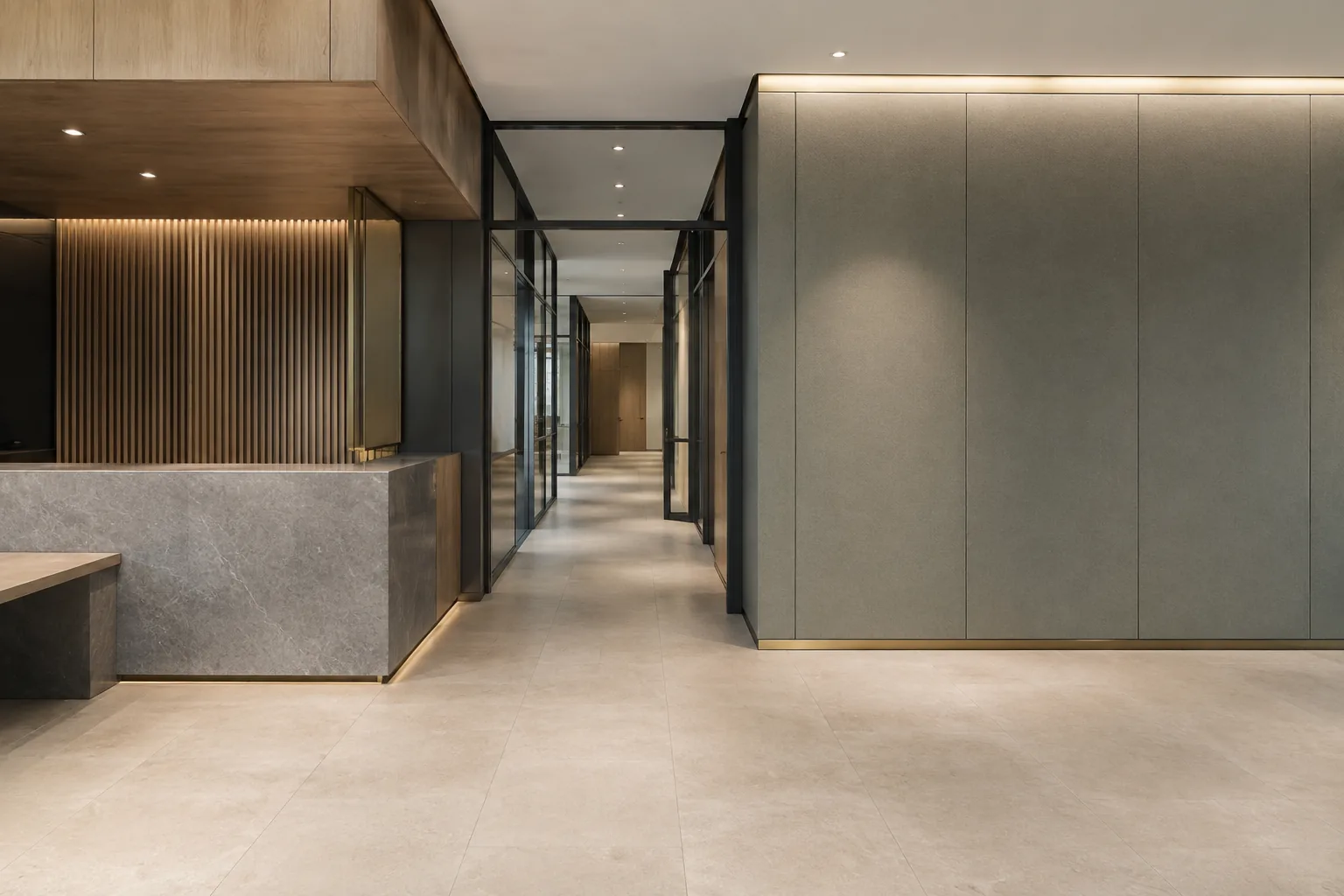
The waiting room sets the mood before anyone sees the dentist. Crews dust and wipe the check-in counter, clean the seating, wipe the magazine rack and the toy corner where you have one, polish the entry glass and vacuum or mop the floor. Consultation rooms, where treatment plans and payment options are discussed, get their desks, chairs and screens cleaned so those conversations happen in a polished room.
Patient restrooms get a thorough clean with fresh paper, soap and sanitizer, supplied by Sage or drawn from the office’s own storage closet. Janitorial supplies such as towels, tissue and dispensers can be delivered and installed as part of the account.
Staff lounge, offices and the back hallway
Dental teams eat lunch in short breaks and spend long days in small rooms. The staff lounge counters, microwave, refrigerator handles and table are cleaned nightly, the doctor’s private office and the billing room get dusted and vacuumed, and the connecting hallways are mopped last, the crew working its way out to the reception area.
Hard floors in operatories and corridors build up a dull film from rolling stools and constant foot traffic. Periodic scrubbing and refinishing through commercial floor care brings back the shine, and carpeted waiting areas can go on an extraction schedule.
Dental offices throughout our regions
Dental practices sit in many kinds of buildings across the Bay Area, the Sacramento Region, the Central Valley and Northern Nevada: suites inside medical office buildings, storefronts in neighborhood shopping centers, converted bungalows turned into offices, and freestanding single-practice buildings with their own parking. In a shared medical building, the suite is cleaned on your schedule while the landlord’s lobby follows its own. For multi-practice clinics with physicians as well as dentists, our medical facility cleaning plan can cover both under one schedule.
Putting your cleaning schedule together
Your operatory and hygiene-room count, the size of reception, any evening or Saturday hours, booked terminal cleans and the floor types set the price. A short tour of the office with your manager is enough for us to write up a room-by-room schedule with its price. Schedule your office tour.
A few useful answers
Common questions.
Who cleans the dental chair and unit, your crew or our assistants?
Your assistants handle barriers and the unit between patients. At night, our crew cleans the chair base, armrests, counters, sinks, stools and floors in each operatory, following the steps your practice lists.
Can you clean on Saturday or Sunday instead of weeknights?
Yes. Visits can run on weekends, after evening appointments or early before the office opens, whichever keeps the crew out of patient hours.
Will cleaners be around our patient files at night?
Crews clean around them without reading or moving anything. HIPAA-aware conduct means files, printouts and monitors stay as your team arranged them, and dusting happens only on open stretches of desktop.
What disinfectant do you use in operatories?
An EPA-registered product, or a specific one your practice names, left wet on each surface through the dwell time its label calls for.
Can a room get a deeper clean after a remodel or before an inspection?
Yes. Any operatory, or the sterilization room, can have a terminal clean set up as a separate visit on the date you pick.